
1974
"Stop stacking noise on top of noise." Why white-noise apps, mouthguards, and ear supplements never touch a locked vagus nerve, and how a forgotten 1970s hospital instrument quieted his ringing in 30 seconds.

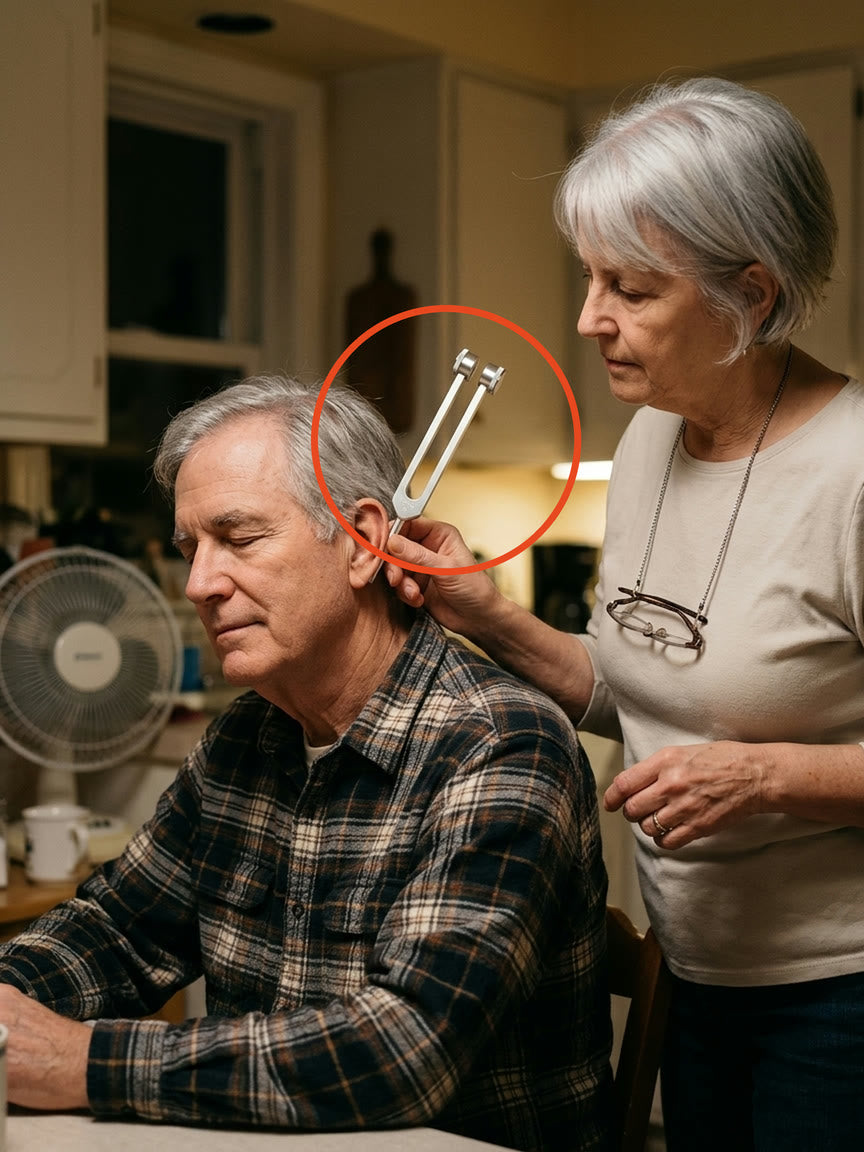
My husband Robert is 69 years old. He is a quiet, steady man who spent his whole life working with his hands and never complained about a thing.
Until the nights started breaking him.
It began about two years ago as a faint hiss in his left ear after a long drive. Within six months, it had turned into a sharp, high-pitched electric whine that never shut off.
During the day, while the radio was on or the shop was busy, he could almost push it to the back of his mind.
The real war started at 10:30 PM, the second our house went dead quiet.
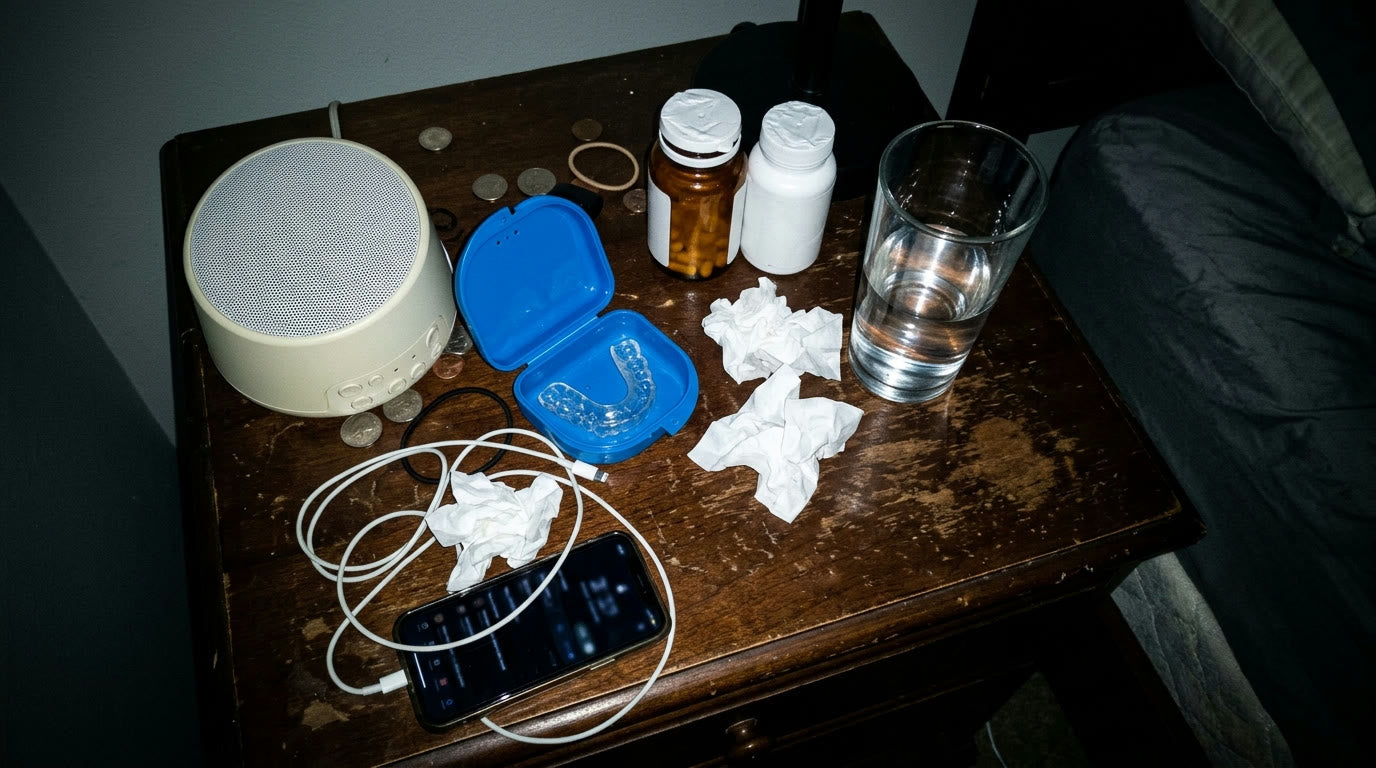
I would wake up at 2:00 AM and find his side of the bed empty. He'd be sitting at the kitchen table in the dark with a box fan running on high, the TV murmuring on low, and his phone playing a "rainstorm" app right next to his pillow. He'd sit there exhausted, rubbing the tight muscles behind his jaw, staring at the wall because the whine inside his head was louder than all three of them combined.

Even worse was what it did to him during the day...
He started dreading quiet rooms. He stopped sitting on the porch with me in the evening. Whenever he backed his truck into the garage and turned the key off, I could see him brace himself inside the cab before the engine died, dreading those five seconds of dead silence when the ringing would rush back in.
We did everything you're supposed to do. We waited four months to see a respected ENT specialist.
They put Robert in the soundproof booth. They checked his eardrums. They ran the audiogram.
Then the doctor walked back in, looked at the chart for forty seconds, and delivered the sentence that millions of Americans hear every single year:
"Good news, Robert. Your hearing is fine for your age. There's nothing structurally wrong with your ear. You'll just have to learn to live with it. Try keeping a fan on at night."

Four hundred dollars out of pocket. Fifteen minutes in the office. "Just live with it."
Seeing my husband sit in the passenger seat on the drive home, rubbing the bone behind his ear in silence, something inside me snapped.
Because I spent 30 years as a hospital nurse, starting back in the early 1970s.
And sitting in that car, looking at the way Robert was rubbing his jaw hinge and the base of his skull, a memory from my early decades on the county hospital wards hit me like a freight train.
I remembered an instrument we used to keep in every single nursing station drawer.
We called it "The 128."
Before I tell you what happened when I tracked down a clinical-grade 128 Hz weighted instrument and pressed it behind Robert's ear at our kitchen table, you need to understand something critical.
If you've been told your ear ringing is "permanent," "all in your head," or "just part of getting older," you haven't been given the whole truth.
Do any of these sound familiar?
The "Quiet Room Panic": You can get through a busy afternoon, but the moment the house goes quiet or your head hits the pillow, the high-pitched whine, hiss, or cicada buzz takes over the room.
The Unconscious Clench: You catch yourself holding tension in your jaw, temples, or the base of your neck without realizing it, or you notice the ringing shifts when you bite down, yawn, or press behind your ear.
Morning Jaw Stiffness & Neck Tightness: You wake up feeling like you clenched your teeth all night, with a dull ache around your jaw hinge or a tight band across the back of your skull.
The "Noise-on-Noise" Exhaustion: You're tired of sleeping with fans, TV timers, or white-noise apps just to survive the night, waking up groggy because your brain never actually rested.
Normal Hearing Tests, Zero Answers: You've been told your ears look "fine," yet the sound inside your head feels like a fluorescent bulb that won't stop humming.
If you nodded to even two of those, pay close attention.
Because clinical research from the University of Rome (UniRoma1 Cohort) and published studies in the Journal of International Advanced Otology have confirmed what hospital nurses noticed decades ago:
Up to 80% of people with persistent ear ringing and normal hearing don't have a "broken ear" at all.
Instead, their ringing is driven by a physical nerve-and-muscle lock: unconscious tension in the jaw and neck, constricted local blood flow, and a locked vagus nerve (the main switch that holds your whole nervous system in alarm mode). A ringing ear rides that alarm.
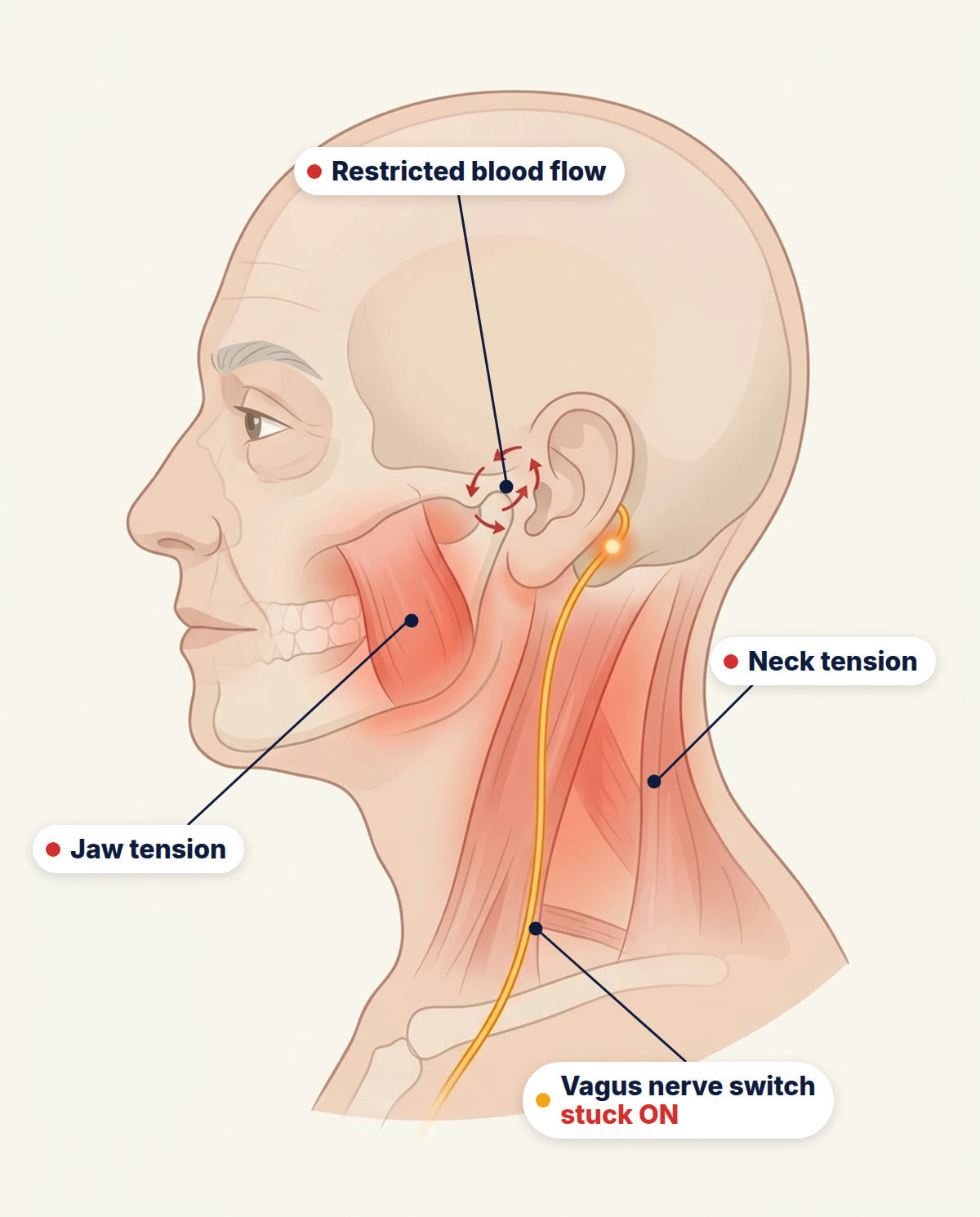
Your ear isn't broken. Your nerve switch is stuck in the "ON" position.
When I started nursing at the county hospital in the early 70s, every single ward had a heavy, weighted steel instrument hanging on a hook or sitting in the top drawer of the station.
It wasn't a musical tuning fork. It was a 128 Hz Weighted Clinical Tuning Fork, about nine inches of cold medical-grade metal with two heavy cylindrical weights bolted to the ends of the tines.
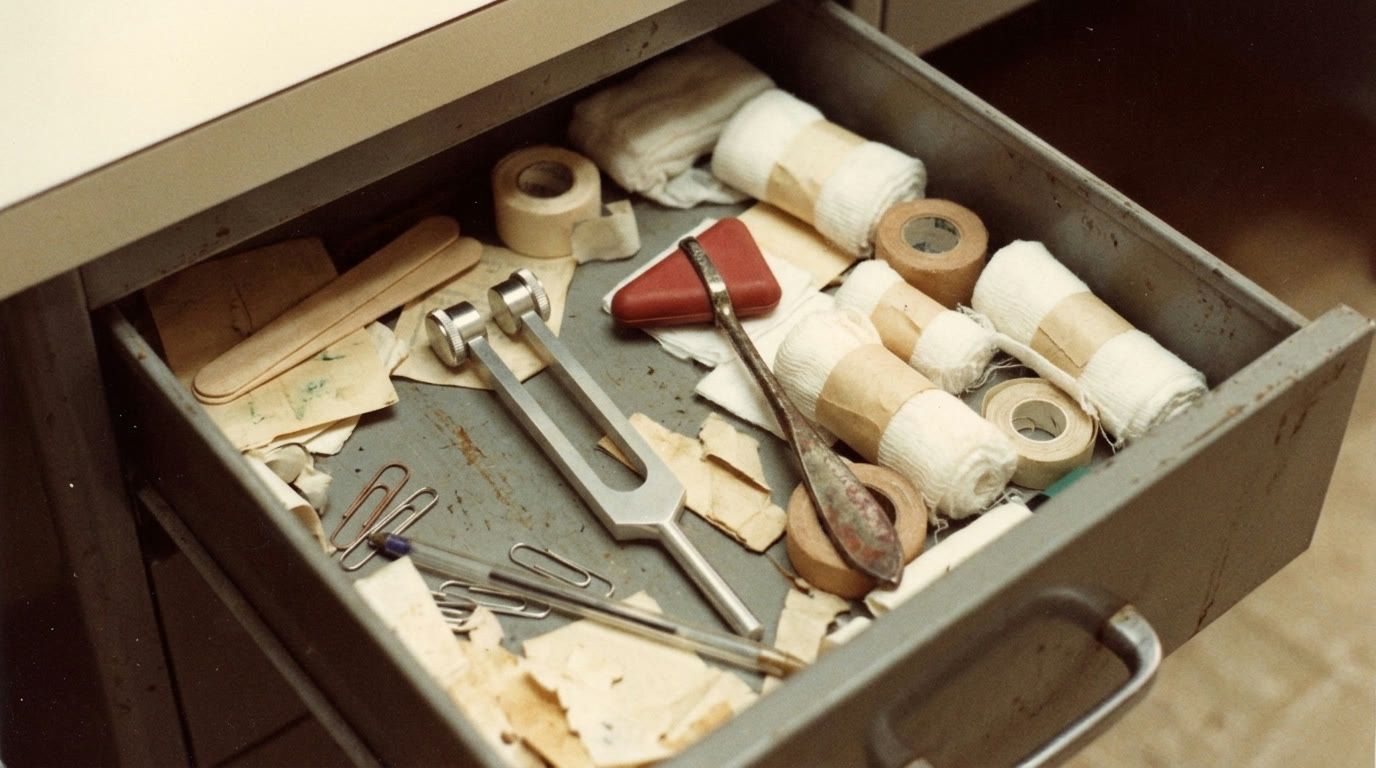
We called it "The 128."
Doctors and nurses used it every single day. We used it to check nerve response in diabetics' feet. We pressed the vibrating stem against stiff joints, post-op swelling, and cramping muscles to open up local circulation. We held it at the base of the skull for patients with brutal tension headaches.
And on the night shift, our patients with ringing ears used to ask for it by name.
Hospital wards get dead quiet at 2:00 AM, and lying stiff in a hospital bed made many patients' ear ringing roar so loud they couldn't sleep. An experienced night nurse didn't hand them a sleeping pill first. We'd strike The 128 against the heel of our shoe or a rubber pad, and press the flat metal stem right against the bone behind their ear and along the hinge of their jaw for 30 to 60 seconds.
You could literally watch their shoulders drop two inches into the mattress. Their jaw would unclench. Their breathing would slow down. And nine times out of ten, they'd look up with wide eyes and whisper:
"It quieted down."
Here is the part that still makes my blood boil.
Nobody ever published a study saying The 128 stopped working. Nobody banned it.
What happened is that by the late 1980s and early 1990s, pharmaceutical sales reps started walking onto our wards every Tuesday morning with catered lunches, branded pens, and boxes of free sedative and prescription samples.
Little by little, when a ward's 128 Hz fork got misplaced, supply stopped ordering a replacement. Why?
Because a solid piece of calibrated metal never runs out.

There is nothing to refill every 30 days. Nothing to renew. Nothing to reorder. Nothing to bill. By the time I retired in the late 90s, the drawers that used to hold our 128 Hz instruments were packed to the brim with pill packets and prescription pads.
Once you understand that nighttime ear ringing rides on a nervous system stuck in alarm, compounded by deep jaw and neck tension and poor local circulation, it becomes painfully obvious why everything on the market fails you:
Two days after Robert's ENT appointment, I went looking for a real 128 Hz weighted instrument like the ones we used on the ward.
And I almost made a huge mistake.
At first, I ordered a cheap $18 tuning fork online. When it arrived, it was a flimsy, unweighted fork meant for tuning musical instruments, with no weights on the ends. The second I touched it to the bone behind Robert's ear, the vibration died instantly.
Here is what only clinicians know: an unweighted fork rings in the air, but stops vibrating the moment it touches solid bone. And standard hospital forks made for quick nerve exams are only built to vibrate for a 10-second test. To drive steady mechanical waves through the bone and into deep tissue, the fork must have calibrated weights on the ends of the tines, and it must be tuned to exact 128 Hz clinical tolerance.
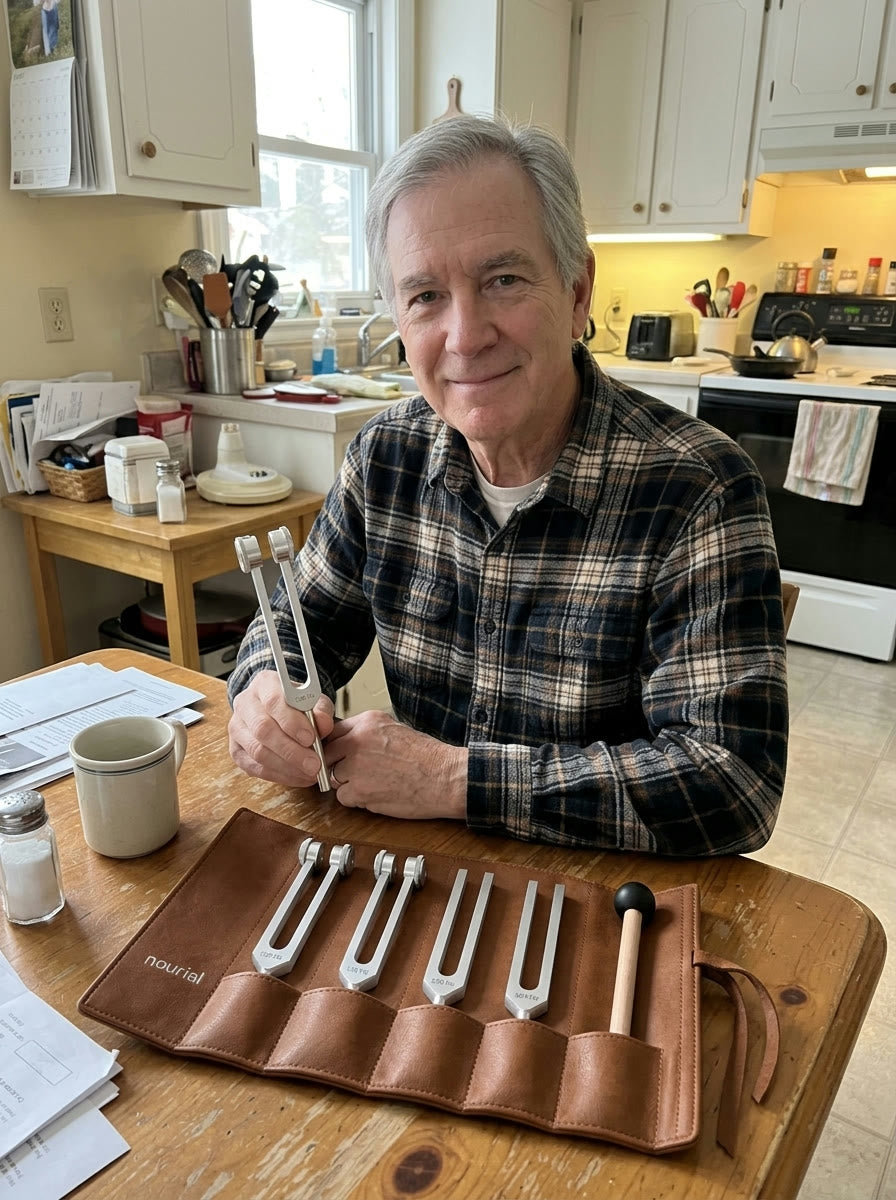
When I finally found the Nourial 128 Hz Weighted Instrument and we sat down at our kitchen table at 9:30 PM, the difference was immediate.
I struck the weighted tines against the rubber activator puck and pressed the stem gently against the bone right behind Robert's left ear.
Because the tines are weighted, there was no loud ringing in the air to bother his ear, and no harsh rattling like a massage gun. Just a quiet, low hum that traveled straight through the bone, down his jaw, and into his neck.
About twenty seconds in, Robert's eyes closed and he let out a breath I didn't realize he'd been holding. His jaw let go of a clench he didn't even know was there. When I lifted the stem off the bone at the 30-second mark, the kitchen was dead silent. No fan. No TV.
Robert sat frozen for five seconds. Then he looked at me and said quietly:
"Clara... it dropped from a 9 to a 4. For the first time in two years..."
Mechanism #1: Reaches Deep Through Bone Into Tissue Fingers Can't: Unlike fingers that stop at the skin, the weighted 128 Hz vibration travels straight through the bone behind your ear, down the jaw hinge, and into the neck. In 30 seconds, it coaxes tight, guarded muscles to finally let go of their clench.
Mechanism #2: Cues Your Cells to Release Nitric Oxide: Peer-reviewed research published in Medical Science Monitor (Salamon et al., 2003) demonstrated that 128 Hz mechanical vibration cues cells to release Nitric Oxide (NO), the natural molecule your body uses to open blood flow and calm local inflammation around the ear and nerves.
Mechanism #3: Settles the Vagus Nerve Switch: The main branch of your vagus nerve runs right past the bone behind your ear. A 30-second pulse of 128 Hz vibration settles that nerve directly, flipping your whole system out of alarm mode so the ringing loses the signal it rides on.
Now, let me be completely honest with you, because as a nurse for 30 years, I have zero patience for "miracle cure" hype.
A tuning fork is not a magic cure. It is a physical tool.
That first night with the 128 Hz Weighted Instrument brought Robert's ringing down from a screaming 9 to a manageable 4 in thirty seconds. That alone was worth every penny of the $79.95 a single clinical-grade 128 Hz instrument costs.
But by the next evening, after Robert spent all day hunched over his workbench, the ringing started creeping back up.
When I read the clinical protocol guide that came inside our Nourial box, I saw why some people only get a few hours of relief while others get lasting, all-night quiet. When your ears have been ringing for months or years, two things are happening at the same time:
If you only use the 128 Hz behind your ear, you release the jaw and nerve switch, which is huge. But if your neck muscles are still tight from the day, or your brain is still scanning the dark room for the whine, the tension creeps back in.
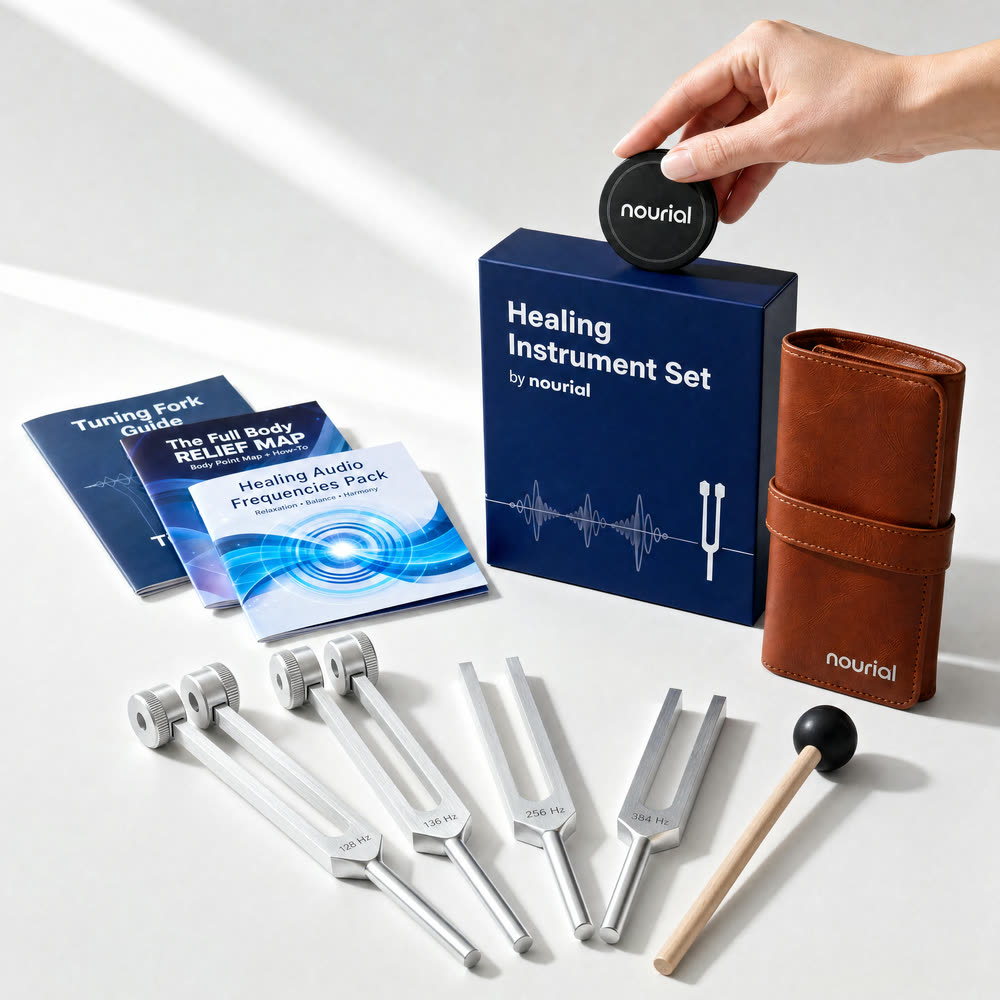
That is why Nourial put together the Complete 4-Instrument At-Home Protocol:

Step 1: The 128 Hz Weighted Instrument (Behind the Ear & Jaw). Your main tool. Press it to the bone behind your ear and along your jaw for 30 seconds. The deep vibration travels through the bone to unclench your jaw, open up blood flow with nitric oxide, and calm the vagus nerve switch.
Step 2: The 136.1 Hz Weighted Instrument (Neck & Shoulders). Built specifically for the thicker muscles in the sides of your neck and shoulders that pull on the base of your skull all day and feed tension right back up to your ears.
Step 3: The 256 Hz & 384 Hz Unweighted Instruments (Quiet-Room Wind-Down). Unlike white noise that runs all night, you tap these two forks softly at a comfortable distance for 20 seconds before sleep. Notice the math: the exact difference between 384 Hz and 256 Hz is 128 Hz. Hummed together, they create a warm, gentle tone in the air that pulls your brain's focus off the high-pitched whine right before you close your eyes.
If you look at standard medical supply houses today, most tuning forks are lightweight diagnostic tools built only to vibrate for a 10-second doctor's exam, not to hold a deep, steady vibration through bone. And real weighted clinical instruments are expensive on top of it, easily running $79.95 or more for a single fork.
And honestly? Even at $79.95 for one fork, it beats spending $60 a month on useless ear pills or $3,500 at a specialist clinic.
However, right now on this page, Nourial is doing something remarkable for first-time readers...
Normally, the full 4-instrument Nourial set retails for $189.90, and a single Nourial 128 Hz Weighted Instrument is $79.95 on its own.
But right now on this special reader page, Nourial is offering a 50% OFF Complete Set Upgrade ($89.95 total), meaning for just $10 more than a single fork, you get all four instruments and the full clinical kit.


Best of all: you buy it once, and you own it for life.
No subscriptions. No monthly refills. No batteries to charge. Just calibrated medical-grade alloy that will work just as accurately ten years from now as it does on night one.
Check Availability →


Again, this is a physical nerve-and-muscle tool, not an overnight magic wand. Based on both clinical observation and thousands of at-home users, here is the realistic timeline:
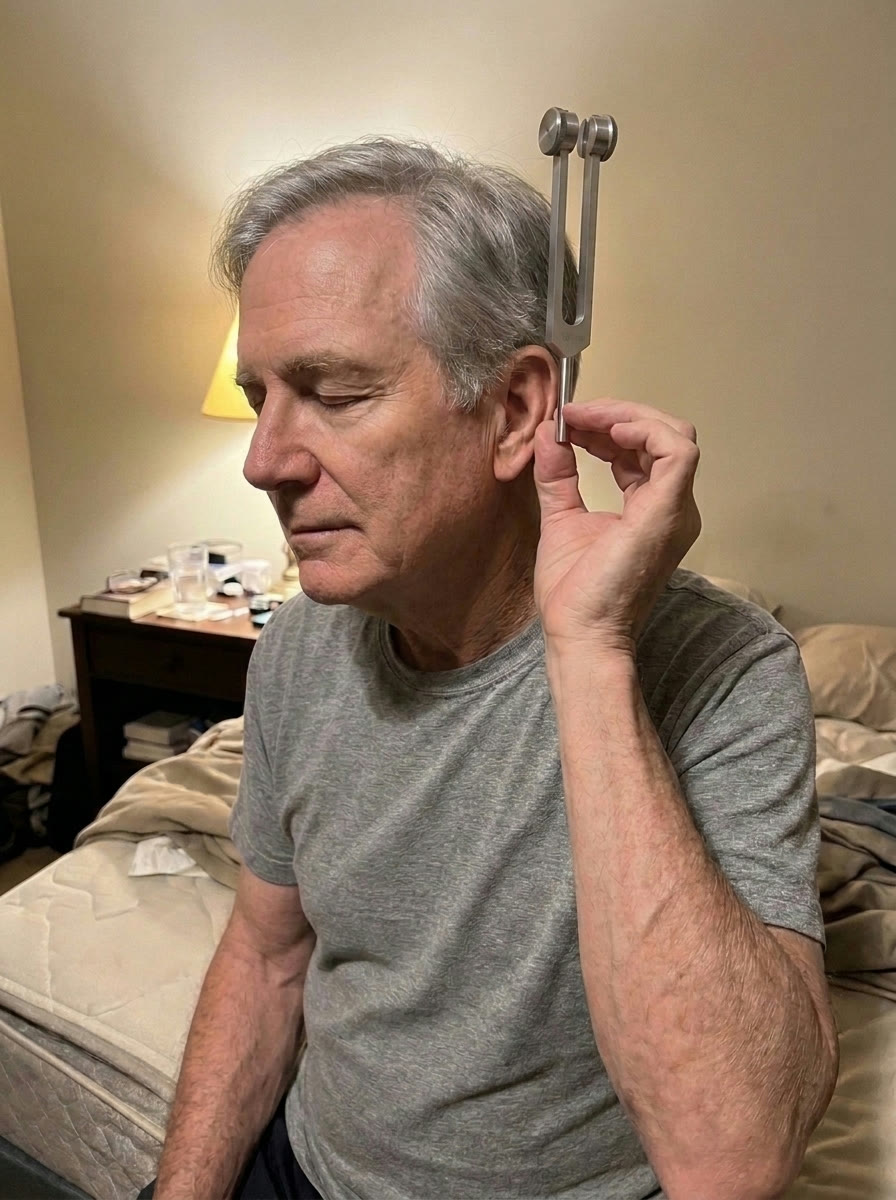
As the 128 Hz vibration travels through the bone behind your ear and down into your jaw, the first thing you'll feel is an involuntary physical release. Your jaw lets go of a clench you didn't know you were holding, your neck softens, and you take a deep breath. For most people, the sharp edge of the ringing drops noticeably right away.
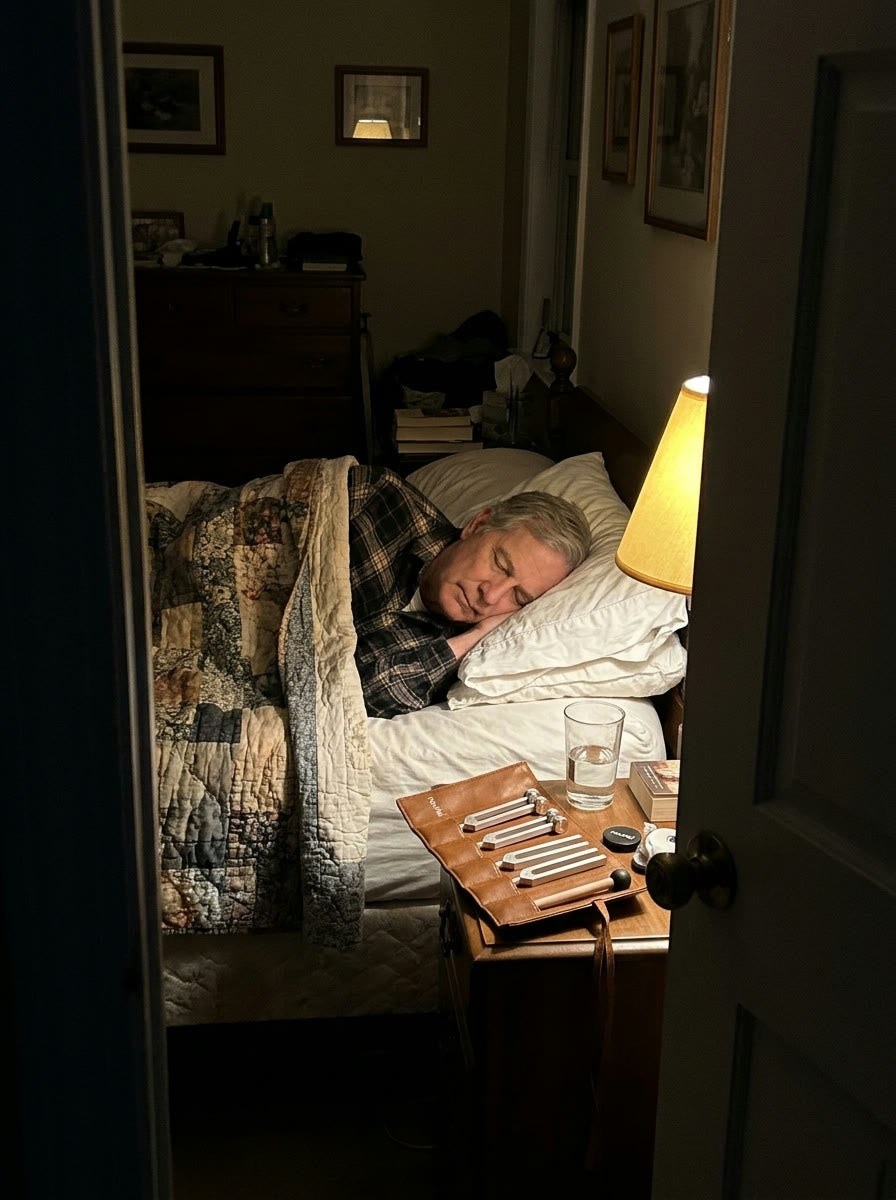
By spending 4 to 5 minutes each evening with the 128 Hz and 136.1 Hz weighted instruments behind your ear, jaw, and neck, followed by 20 seconds of the 256 and 384 Hz pair, your vagus nerve stops entering bedtime in alarm mode. You fall asleep faster without needing the TV or fan blasting.
Months or years of nerve tension and jaw clenching don't vanish in one night, and massage alone always wears off after 3 or 4 days. Having these instruments on your nightstand means you can reset that tension every single evening in five minutes, giving you quiet mornings and peaceful evenings on your porch again.
I know how skeptical you probably are right now. When you've been brushed off by specialists and burned by pills and gadgets that do nothing, you have every right to be.
That is why Nourial doesn't ask you to decide today. They ask you to test it at your own kitchen table first.
Order the Nourial Complete Healing Instrument Set today. When the box arrives, take out the 128 Hz Weighted Instrument, strike it on the rubber activator, and press the stem gently against the bone behind your ear for 30 seconds when the room is quiet.
Feel what happens to your jaw. Feel what happens to your breathing. Listen to what happens to the volume in your ears over the next 60 full days.
If you don't feel your jaw and neck tension melt away in the first 60 seconds, or if you aren't sleeping more peacefully without stacking noise on top of noise, simply send the set back anytime within 60 days for a 100% refund of every penny. No hoops, no restocking fees, no questions asked.
Last night, around 9:00 PM, I walked out onto our back porch.
Robert was sitting in his rocking chair with a cup of decaf coffee. There was no radio playing. No fan running. Just the sound of the wind in the trees and crickets at the edge of the yard.
He uses his Nourial set for about four minutes every night before bed. It sits right on his nightstand, a solid piece of clinical steel that will never need a prescription, never need a refill, and never run out.
Right now, you have two choices:

You can close this page, leave everything the way it is, and face another 11:00 PM tonight with a fan blowing, a phone app humming, and your jaw clenched tight against a sound doctors told you to "just live with."
Or you can test the forgotten 128 Hz hospital instrument that takes 30 seconds through the bone behind your ear, completely risk-free for the next 60 days.
Because these instruments are precision-machined and hand-calibrated to exact 128 Hz clinical tolerance, production batches are strictly limited.
Click the button below to see if the 50% OFF Complete Set Upgrade is still in stock today:
Check Availability →P.S. Remember: a single calibrated 128 Hz Weighted Instrument normally sells for $79.95 by itself. Through this special reader page, for just $10 more ($89.95 total), you get the 128 Hz Weighted Instrument PLUS the 136.1 Hz Weighted Neck Instrument, the 256 Hz & 384 Hz Acoustic Pair, and all 6 accessories and clinical guides, with Free Priority Shipping.
P.P.S. You have 60 full days to test it in the quietest room of your house. Either it brings you the physical release and quiet nothing else has touched, or you get 100% of your money back.